Independent Candidate – Eilean a’ Cheò by-election 19 June 2025

Tag: news

  • Voting – how STV works

    There have been a few folk in the last few days asking about their registration and how the vote actually works so hopefully this will help, or point you in the right direction to find the answers. The Single Transferable (STV) Vote has been used in Scottish Council elections for a while.

    If you are not sure if you are registered, need an emergency proxy, etc, contact the Electoral Register here.

    It is a way to make sure that those elected represent as many of the voters choices as possible. That is why the votes can be transferred to another candidate. You do not have to vote for someone you do not want to represent you. You are voting for the candidates in order of who you want.

    THE BASICS

    The STV is a way to find on one winner that makes sure as many votes count as possible – even if it’s not your first choice. When you vote, you list everyone you want in order of preference – from number 1, then number 2, etc. You only have to vote for the candidate(s) you want to represent you.

    COUNTING

    Once everyone has voted, the number of votes is counted. First, there is some maths to find the number of votes the candidates need to get to for election. We need to know the number of votes cast, and the number of seats.

    For this, let’s say 1000 people have voted. That is then divided by the number of seats available plus one. For Ward 10, that’s one seat, plus one, so it’s 2.  1000 divided by 2 is 500. We now add 1 and that’s the number that the candidates need to reach to win the seat – 501 votes. Still with me?

    TRANSFERING THE VOTES

    All of the number one choice votes are counted. In this election, if one candidate does not reach the half plus one mark, then the person with the lowest number of votes has those votes transferred to the second choice on their ballots. If there isn’t a winner, then the process repeats.

    THE RESULTS

    There can be two outcomes – the count continues until someone is elected because over half of the voters have supported their election, or nobody is elected and we have another election.

    Elections have been won using the system because voters did not know they did not have to vote for everyone standing. I am saying this because I do not want someone to vote for me when they do not actually want me to represent them. We need elected officials that we want. We need people that will represent our communities. We need councillors that listen to the majority and have the future of our communities at the core of what they are doing.

    STILL NOT MAKING SENSE?

    Then have a watch of this video from the Electoral Commission.

    WHY PUT MYSELF THROUGH THIS

    Yes, I am writing this in the hope of getting you to vote 1 for me on Thursday. I am also writing this so that others know there are people out there that are not the classic politician. I am standing to put my experience to good use. I know how to represent communities and achieve positive change. Representation matters.

    There is a full re-election in 2027. I can only hope that my standing will inspire other young people to give it a go. It is hard work. It is not straight forward. It is worth it. It is easier being a part of the conversation than shouting from the outside. We need representatives that represent all of us. Until then, you can support me to get my foot in the door and vote 1 for me.
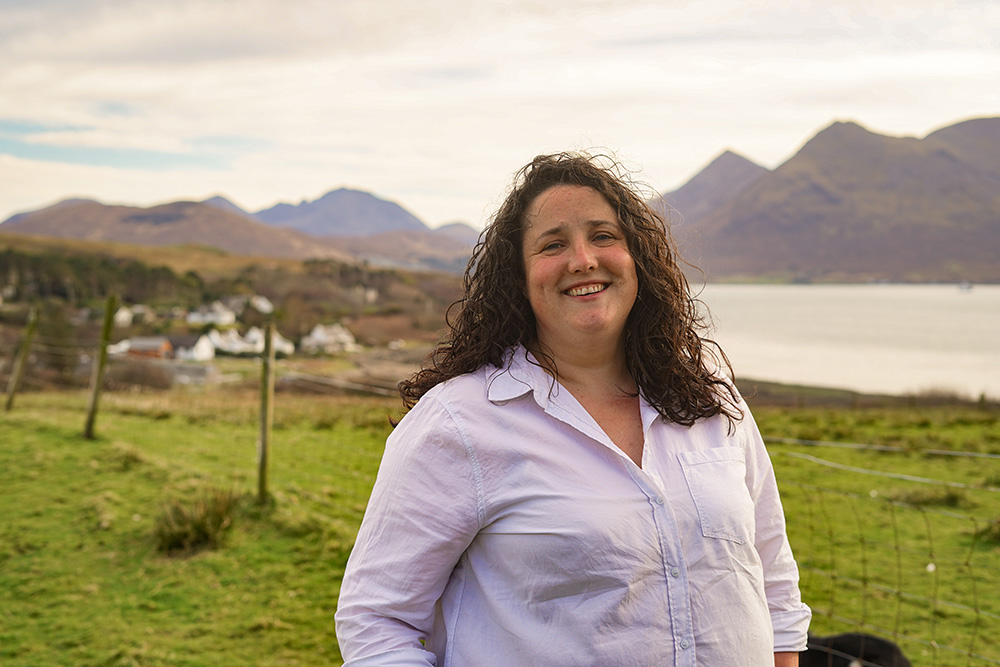
  • Personal and Professional

    I work in community development and representation because I followed my curiosity in history. I had worked in home care for a few years when I went back to Sabhal Mòr Ostaig in 2008 to improve my Gaelic. I did keep working in homecare at the same time as the full time first year course and I had always planned to go back into homecare. However, the appeal of the Minority Language and Community Development course was too much to ignore. The course allowed me to learn about the history, economics, politics, and culture of the Highlands and Islands, Scotland and beyond.

    Engagement, talking to people, is at the heart of development work. To me, engagement is making sure everyone knows the basics, knows where to find out more, how to engage with the project/organisation if they want to, and how to influence what is happening. I started working for the North Harris Trust in 2012 as their Engagement Officer as part of a graduate placement scheme with HIE. It was an excellent opportunity and provided valuable insight, training, and connections. Apparently, a good community engagement result was a response rate of 10-15%. The NHT Community Consultation had a 24% response rate for households. We even tailored the survey so that the local school children could add their own responses.

    Working with communities can be a challenge, and I love finding ways through the challenges that we face. The key to it is respecting all involved. Sometimes, we need to wait for the right set of circumstances or the right people. When I worked for the Muaitheabhal Community Wind Farm Trust as their Development Officer (DO), I updated the Park and Kinloch development plan. This plan required working with all of the organisations in their area. It took a lot of coffee and cake, but we did it! You can see the report here. There are two priority benefits to a detailed plan like this

    • the community themselves can see exactly what is being planned in one place
    • funders see how their funding tied into a much wider plan.  

    Much of what I have worked in is a mix of a translation service. What one person needs to understand something is not the same for everyone. Some people want basic info and pictures, others want a spreadsheet, others want a reel. Funding priorities are one of my favourites. The work I have done on Raasay is a great example of what can be achieved when working together and keeping everyone involved.

    Raasay Development Trust (RDT) was established in 2014 to take on projects to support the island to thrive. In May 2022, Raasay was announced to have been chosen as one of six islands to be funded through the Carbon Neutral Islands project. As a Director, I worked in the background to support the Development Officers. The first job was to get the community involved. The plan included drop-in sessions, events, and creating a household survey. With two part time Development Officers that went round to help with filling in the form, we managed to get a massive 86% response rate. The resulting Community Climate Action Plan can be found here

    Raasay has an incredible number of groups and organisations for such a small island. It took a monumental effort, time, and resources to complete the first years’ outcomes on time and within budget. If extra information is needed, we know who to talk to. I hope the lasting legacy is the continuation of the round table meetings of all the organisations. In any community, it can be difficult to keep conversations respectful. No matter the subject, there are always nuggets of information there that people agree on. Development officers, councillors, and other are here to help find those nuggets and keep us all working together for the benefit of all. It can be surprising when you pare away the layers of an argument and find the same concern.

    When I worked with Community Land Scotland as the Gaelic Development Officer, groups always knew they would be able to ask me anything. Some of the best projects come from a “silly idea” that someone wanted to run by me. Knowing you can contact someone, and get a supportive response, builds confidence in whatever you are involved in. I have always been easily contactable, no matter the role, that will not change.

    Like community development officer, being a Councillor is representing the community, not your personal views. That must never be lost in the work that is prioritised and brought forwards. As a development officer, you are there to represent and advocate for the communities. As a councillor, I will be the local voice for the people of Skye and Raasay.

    PS – Before you ask, in the Highlands especially, you will only get 100% engagement if you’ve infuriated the locals!

  • Why stand as an Independent Candidate

    Why stand as an Independent Candidate

    How did I get here?

    Standing as an independent candidate is thankfully nothing new here in the Eilean a’  Cheò Ward for The Highland Council. Following Calum Munro’s announcement at the start of the year that he was to stand down, I spoke to a few people, including Calum himself and John Finlayson, both Independent Councillors about what was involved. I considered the responsibility and how the workload would tie into what I am already doing. At no point did I think about joining a political party.

    What those conversations did confirm is that being a councillor is similar to the work of being a development officer, but on a different scale and slightly different way. I have worked in community development in variety of roles since 2012. The roles I have loved most have involved working with people to get their voices heard. This is a logical next step in my commitment to prioritising the needs and voices of the people.

    In high school, one of my favourite teachers was explained party politics to us in class. His explanation used buses. We are all trying to get somewhere specific, but the buses only follow a specific route. Party politics works in the same way. The political party is following their own policies and ideologies. So when you are voting it is for the one that gets you the closest to where you are wanting to be. Independent Councillors are like the small, flexible bus company that responds to the real needs of its local customers, rather than the pull to of honeypot destinations.

    I actually had someone ask me on my very first day canvasing if I was truly an Independent Candidate. I’ve never been a member of any party. Growing up around predominantly Labour voters has influenced me, but the modern parties are unrecognisable to their previous policies.

    Being an Independent Candidate means that you do not have the resources of a party machine, however it has opened my eyes to who is around me – from organising the leaflets, finding out how to book a door drop, social media accounts, the website, information packs, the nomination form – throughout all of it, I have been grateful and inspired by the amazing people who have stepped up and support me. I do not know everything, but I do know where to find the people that do. It takes a village to grow and Independent Candidate’s campaign.

    Far too often, a party agenda drowns out the voices of the people. I hear it so often that people feel ignored and overlooked. As an independent councillor, I can promise to put people front and centre.

    Anyone that’s met me knows that I love a blether. I talk through problems and opportunities with my friends. It is how I make sense of things. What makes the difference, what promotes change, is when we look at why there is an issue, what could be done collectively to fix it, and how to prevent it happening again. I am not looking for blame – I am looking for practical solutions.

    We saw during Covid the way communities were able to bypass the usual red-tape and create workable solutions to problems that arose. I am able to work between party politics in the same way. Often the answers have already been suggested. We need to listen and work together.

    My background in engagement has led me to be involved in making sure everyone in an area has their voice heard. My focus will be to make sure that the ways constituents can influence what is happening are as simple as possible. Community Councils need supported, information needs to be easily found.

    The election process has been entirely new to me. The staff of The Highland Council, the Councillors, and everyone else who is helping me find my feet, have been an invaluable network of support.

    I recognise that not everyone has a readily contactable network of support when faced with a problem. I have always been contactable when I’ve worked in a community support role, and as a Councillor I will be no different. We need to trust that those representing us are authentic, genuine, and will support us. I am doing this independently of a party because I believe that if I can rely on the people of Skye and Raasay to get me into The Highland Council, they can rely on me when I am there.

    Being an independent candidate is not just a personal choice; it is call for people to work together. Standing as an Independent Candidate is not a lack of conviction; it is the courage, conviction, and ongoing dedication to work for the people. This will be a challenge, but I have never been one to shy away. Together, we can prove it is a powerful force for meaningful progress.